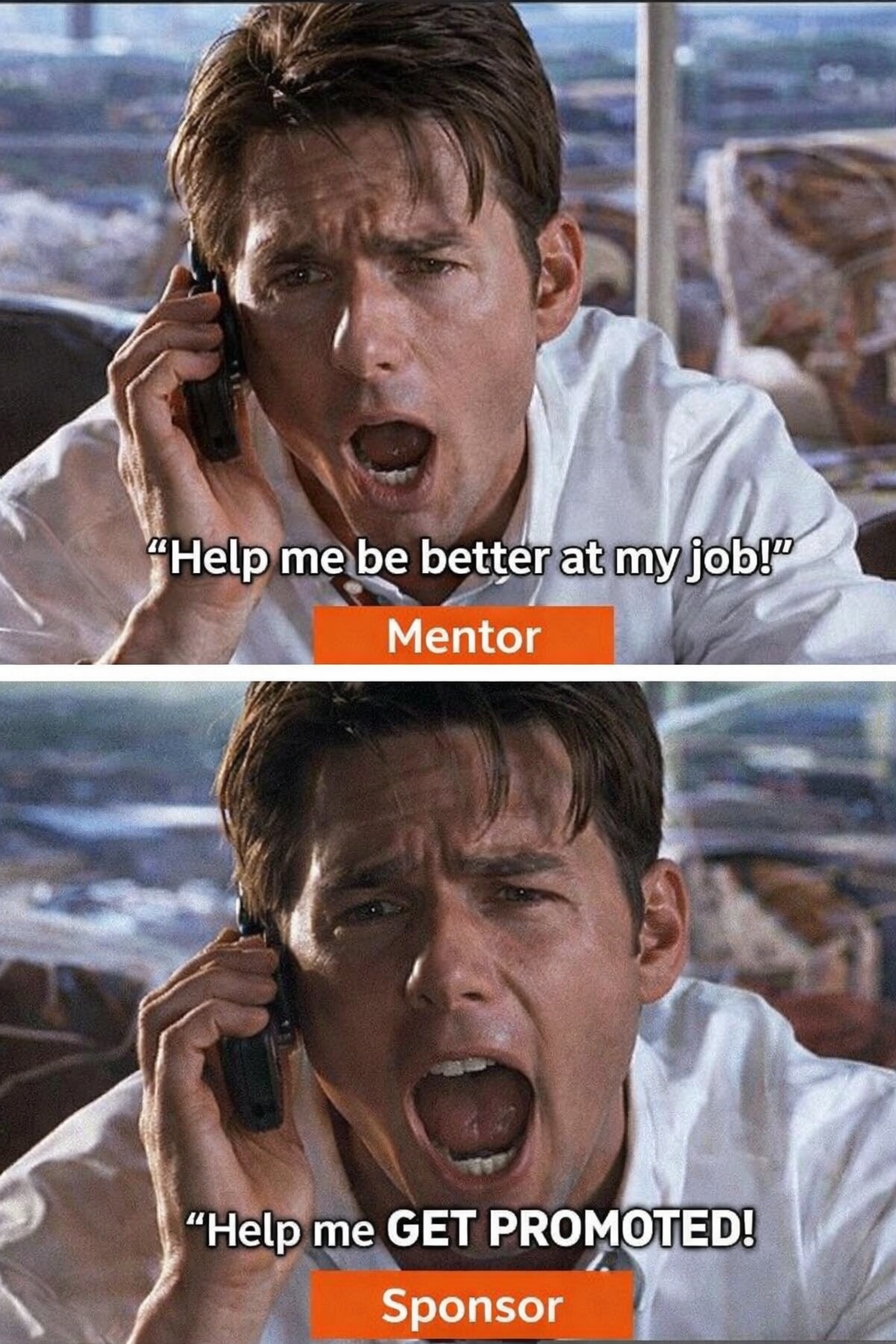
Mentor vs sponsor: the difference that changes your career
When I first started working in BigLaw (a long time ago), I thought mentors were the secret sauce for career advancement. Over my career, I came to realize that while mentors are invaluable, there’s a whole other layer that many high-performing attorneys overlook: sponsors. Understanding the difference between the two can literally change the trajectory of your career.
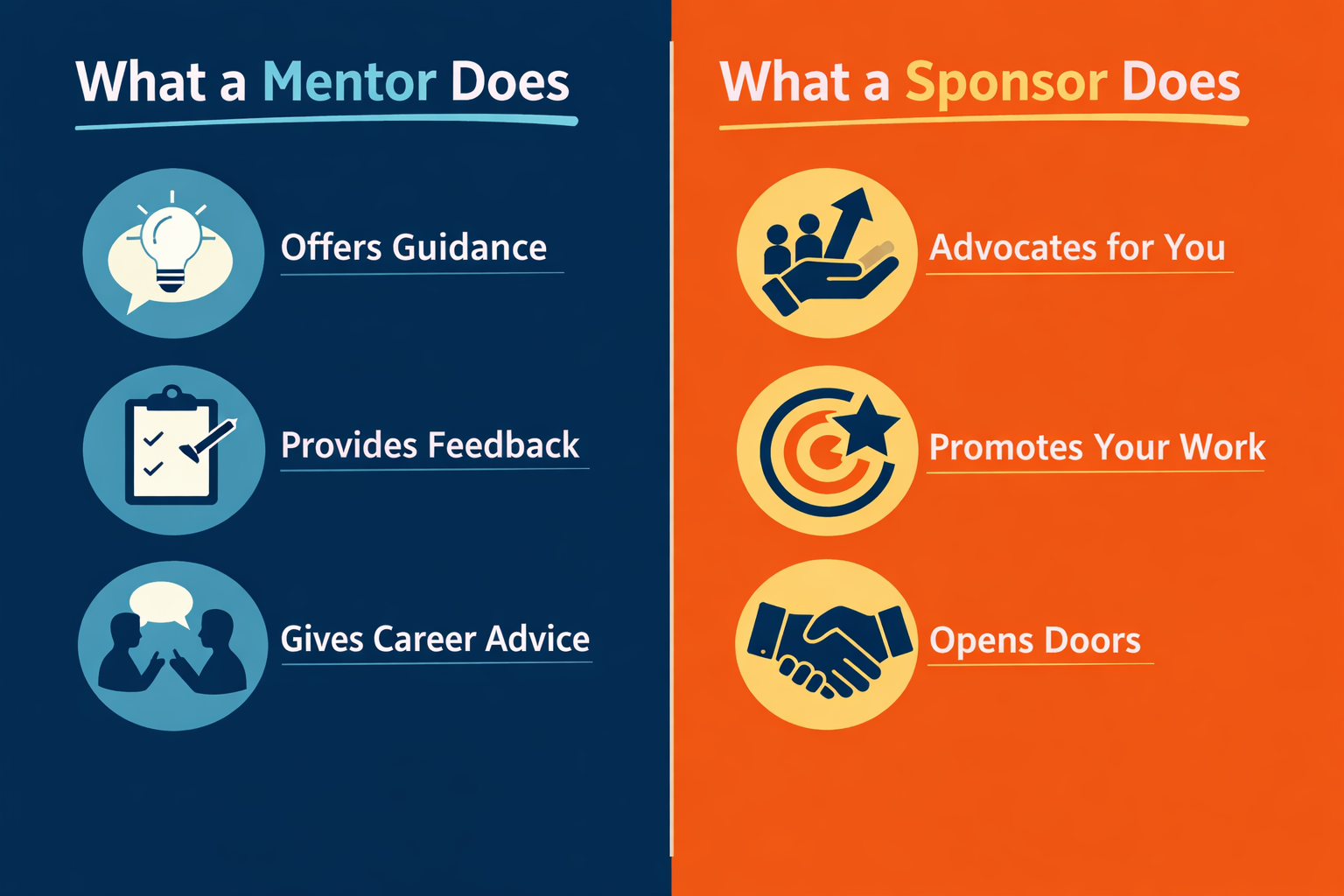
What a Mentor Does
Mentors are advisors, coaches, and sounding boards. They provide guidance, offer feedback, and help you navigate tricky situations. They’re the people you go to when you’re stuck on a case, unsure about office politics, or trying to decide your next career step.
I’ve had mentors who helped me draft my first client presentation, advised me on negotiating my schedule, and even coached me on handling challenging judges. Mentors help you grow in skill and confidence, and that’s critical.
What a Sponsor Does
Sponsors do something mentors typically don’t: they actively advocate for you. They use their influence and reputation to create opportunities for you, from stretch assignments to key client interactions. Sponsors make sure the right people notice your work, and they often put their neck on the line to advance your career.
Here’s the key difference:
Mentor: Helps you improve.
Sponsor: Helps you get seen.
High performers often have brilliant mentors but neglect sponsors. You could be excelling at your work, receiving glowing feedback, and still be overlooked for promotions or high-profile assignments. That’s where a sponsor changes everything.
How to Cultivate Both
Seek mentors intentionally: Look for attorneys or leaders whose careers you respect, who have the wisdom and experience to guide you.
Find sponsors strategically: Sponsors are often people with power and visibility in your organization. Demonstrate your value consistently, and make it easy for them to advocate for you.
Show results: Sponsors can’t advocate for you if there’s no measurable performance. Deliver on your work with excellence, but don’t assume visibility will happen automatically.
Build relationships: Authenticity matters. Sponsors are more likely to invest in someone they trust and genuinely like.