How to Start Your Day With More Clarity and End It With Less Stress

If you’ve ever ended your day feeling mentally exhausted—even after you’ve stopped working—you’re not alone.
A lot of professionals assume burnout is caused by workload.
And sometimes, that’s true.
But often, the deeper issue is this:
There’s no clear beginning… and no real ending to the day.
You wake up and immediately react.
You check your phone before you think.
You step into emails, messages, and demands before setting direction.
Then by evening, your body may be done…
…but your mind isn’t.
It’s still replaying conversations.
Thinking about unfinished tasks.
Planning tomorrow before today has even ended.
That kind of rhythm drains energy faster than most people realize.
If you want more clarity during the day—and less stress at night—two simple practices can make a powerful difference.
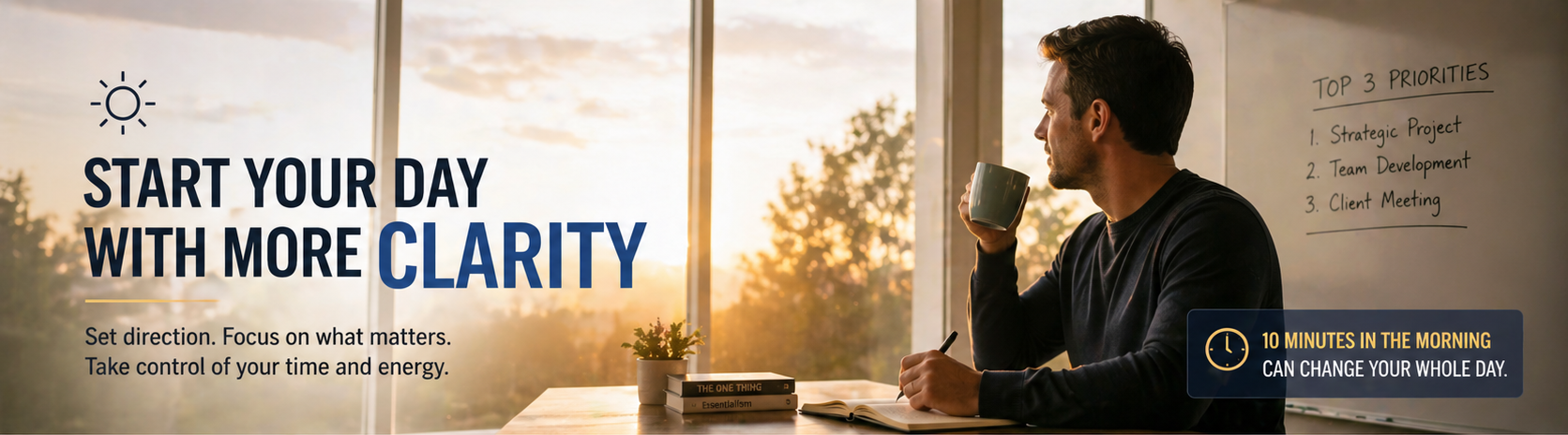
1) Start Your Day With a 10-Minute Clarity Review
If you begin your day in reaction mode, there’s a good chance you’ll stay there.
That’s why one of the most energizing things you can do is create clarity before chaos begins.
Try these 3 questions each morning:
What are my top 1–3 priorities today?
What could derail my energy if I’m not intentional?
What’s one thing I can do today that would make the day feel successful?
That’s it.
You don’t need a long, complicated morning routine.
You just need a few minutes of direction.
Why this works
Unclear days are exhausting.
When your attention gets pulled in multiple directions early in the day, your best mental energy often gets spent on:
low-value tasks
other people’s urgency
avoidable decision fatigue
A short clarity review helps you take control of your attention before something else does.
Quick habit tip
Do this before:
opening email
checking Slack or Teams
responding to texts or notifications
Protecting your first 10 minutes can change the tone of your entire day.
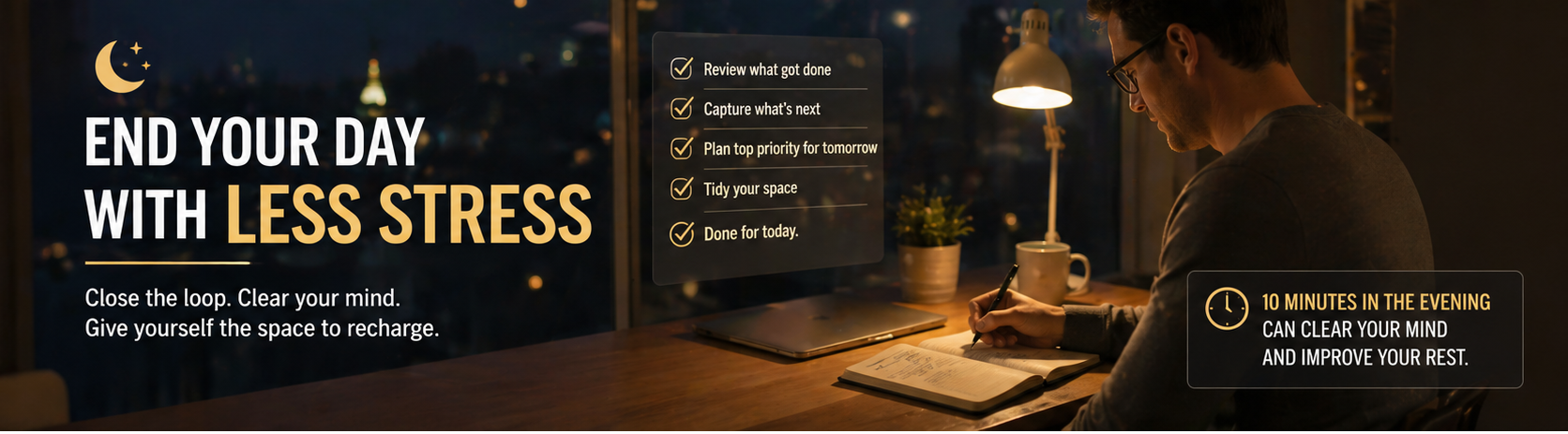
2) End Your Day With a 10-Minute Shutdown Ritual
Many professionals don’t actually end their workday.
They just stop working physically… while mentally continuing all evening.
That’s why a shutdown ritual is so powerful.
It gives your brain a clear signal:
“Work is done for today.”
What to include in your shutdown ritual
Spend 10 minutes doing the following:
review what got done
write down what still needs attention
identify your top priority for tomorrow
close tabs and tidy your workspace
consciously say: “Done for today.”
Yes—even that last part.
It may feel simple, but it works.
Why this works
Open loops drain energy.
When your brain doesn’t trust that unfinished tasks are captured, it keeps them active in the background.
That’s one reason so many professionals struggle to “switch off” after work.
A shutdown ritual helps reduce that mental carryover and gives your mind permission to rest.
Quick habit tip
Set a recurring alarm 10–15 minutes before your ideal end-of-day time.
Use it as a cue to close the loop.
The Real Win: Better Boundaries Around Your Day
You don’t need to control every minute of your schedule.
But you do need:
a stronger beginning
a clearer ending
fewer mental leaks in between
That’s what these two simple practices create.
And over time, they can help you feel:
less reactive
more focused
more in control of your energy